

What is the prostate and what is it necessary for?
Only the man has prostate. Its size can vary over time, and in many men the prostate enlarges as they get older, especially after age 40 or 50. It is located immediately below the bladder and is usually about the size of a walnut. Its function is not fully understood, but produces approximately 10% of seminal fluid (whitish secretion that helps sperm move along the urethra).
What are the prostate problems?
The prostate can suffer different issues, But more often than not, it increases in size, becomes infected, or suffers a cancerous process. Therefore, the three main disorders are:
Benign prostatic hyperplasia (BPH)
Benign prostatic hyperplasia It is the most common problem affecting the prostate. It is the gradual enlargement of the prostate gland. It is not a cancerous process. Symptoms often begin after age 45; in fact, it affects approximately one-third of all men over 50. As the prostate enlarges, it literally compresses the urethra, which can lead to urinary problems. problems when emptying the bladder.
Prostate cancer
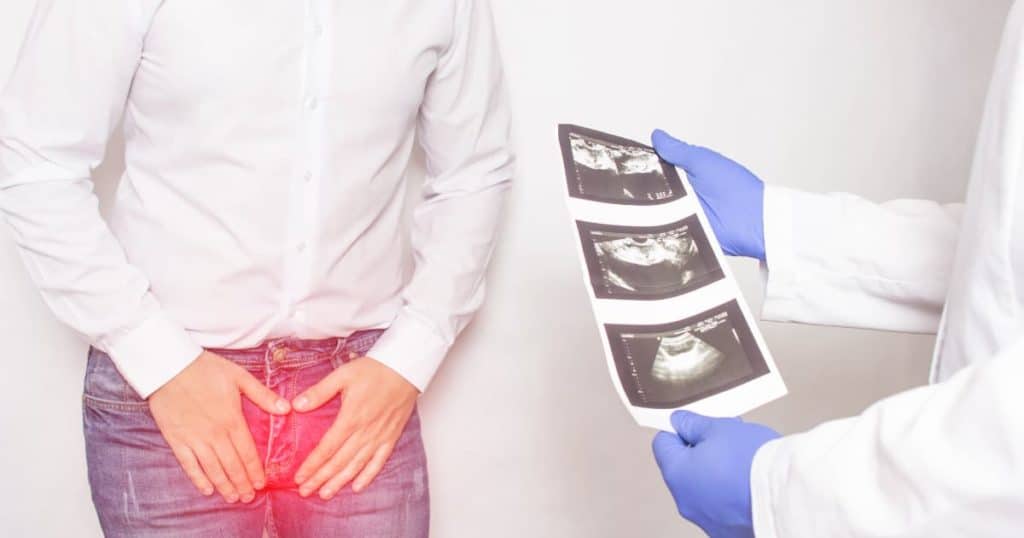
Prostate cancer develops slowly, and most men will live out their lives without ever knowing they had it. Because the prostate is difficult to locate and impossible to visualize, it is very important that See your doctor as soon as you think something is wrong.. Prostate cancer can diagnose with a medical examination (They will perform a digital rectal exam, meaning the doctor inserts a finger into the rectum to check for any changes), or they will perform a ultrasound or a biopsy.
Prostatitis
It is an inflammation of the prostate gland, which may or may not be associated with a bacterial infection. Relatively little is known about it as a disorder; in fact, it is sometimes misdiagnosed as a sexually transmitted infection.
What are the symptoms of prostate problems?
The symptoms will vary slightly depending on the specific condition, but in benign prostatic hyperplasia (BPH), the symptoms are usually:
- Difficulty starting to urinate, and the flow of urine is weakened.
- Feeling of not having completely emptied the bladder.
- Having to urinate frequently (more than every two hours) and having to get up several times during the night.
- Dribbling or incontinence.
- Urgency or need to urinate.
- Sudden inability to urinate.
The symptoms of the infection, however, are somewhat different, since if it is an acute infection, the following usually appear:
- General malaise.
- Fever, usually in spikes with chills.
- Pain when urinating.
- Since some prostatitis occurs on previously diseased prostates, it is not uncommon for BPH symptoms to appear in the preceding months or weeks.
Prostate cancer is somewhat different, as it may not cause symptoms and be discovered when performing a PSA (prostate-specific antigen) test during a routine check-up, or it may present with the symptoms of BPH, or only with the presence of blood in the urine.
What diagnostic techniques are most commonly used?
Prostate-specific antigen (PSA): Most men in good health have a PSA concentration below 4 nanograms per milliliter of blood. It's important to note that the likelihood of developing prostate cancer increases as PSA levels rise. Lower PSA levels can be expected at a younger age.
Rectal examination: It consists of a digital rectal examination (DRE) in which the doctor can feel any lumps or firm areas in the prostate that could be cancer and at the same time allows him to establish an approximation of the size of the prostate.
If one of the first two tests is abnormal and inflammatory or infectious problems are ruled out, a prostate biopsy is necessary to confirm or rule out a cancer diagnosis.
Conclusions

Despite the reservations the topic raises for some, awareness of the importance of early detection of prostate cancer It's gradually taking root in society. Proof of this is the World Prostate Cancer Day which is celebrated on June 11.
The most effective way to prevent prostate problems is tests performed that help with the early diagnosis of these problems at the slightest warning sign or if you have family history of these problems. Learn about our laboratory service.