

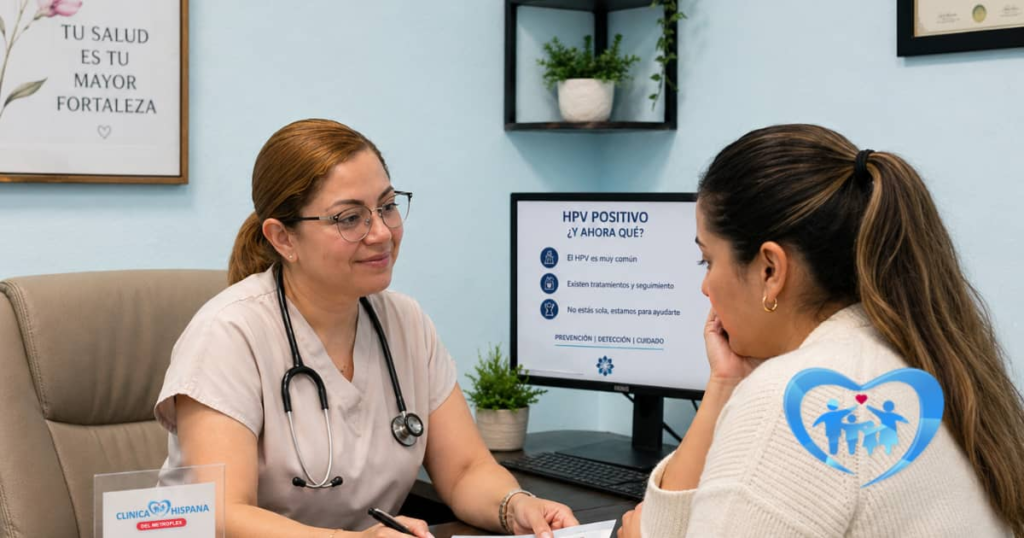
Receiving an HPV diagnosis can feel overwhelming. Fear, confusion, and questions pile up—and there isn't always someone to answer them clearly. At Clínica Familiar, we hear these concerns every day. This article compiles the six most frequently asked questions from our patients, with honest answers, free of technical jargon, and in Spanish.
If you have HPV or suspect you have it, you're not alone. This infection is more common than you might think—and with proper follow-up, it's manageable.
1. Does HPV disappear on its own or is it permanent?
This is undoubtedly the first question almost every patient asks. And the answer is more encouraging than many expect.
In approximately 9 out of 10 cases, the body eliminates the virus on its own. within a period of one to two years. The immune system works in the background, without the person noticing, and the virus disappears without a trace.
However, in a minority of cases the infection persists. And it is in this persistence that changes can appear in the cells of the cervix which, if not detected in time, could progress.
Most importantly: the key isn't the diagnosis, but what you do afterward. Women who have regular medical checkups are protected—changes are detected before they become a serious problem.
How often should you get checked? It depends on your diagnosis, your age, and your medical history. Your doctor will tell you the appropriate frequency for your specific case.
2. High-risk vs. low-risk HPV: What does it mean for me?
HPV encompasses more than 150 types of viruses. Not all of them are the same—and understanding the difference can completely change your perspective on a diagnosis.
low-risk HPV
Types 6 and 11 are the most common in this group. They can cause genital warts (also called condylomas), which are bothersome but do not pose a cancer risk. They are treatable.
high-risk HPV
Types 16 and 18 are the most relevant. They are responsible for the majority of cervical cancer cases worldwide. However, and this is crucial:
Having high-risk HPV does NOT mean you will get cancer. It means it needs to be monitored. With regular checkups (Pap smear or HPV test), cell changes are detected early—when treatment is simple and effective.
Early detection completely changes the prognosis. That's why annual checkups aren't optional—they're the most important protective tool you have.
3. Do I have to tell my partner that I have HPV?
This question is always accompanied by fear, shame, and often guilt. Before answering it, it's necessary to clarify something fundamental:
Having HPV is not a sign of infidelity. The virus can live in the body for years—even decades—without causing any symptoms. Many people have it without knowing it. A diagnosis today may correspond to an infection from many years ago.
That said, yes, it's recommended to talk to your partner. Not from a place of guilt, but from a place of mutual care. Your partner may also have the virus—and a medical checkup will help them understand their situation.
How to approach the conversation? With information. Explain that HPV is the most common sexually transmitted infection, that most sexually active people will contract it at some point in their lives, and that medical follow-up is available.
In Clinical Hispanic Metroplex We'll guide you on how to handle this conversation. You don't have to go through it alone.
4. Is the HPV vaccine effective if I already have the virus?
This is one of the most widespread—and most incorrect—beliefs:
“"I already have HPV, so why bother getting vaccinated?"”
The reality is more nuanced. And it might surprise you.
HPV has more than 150 types. If you have one of them, the vaccine can protect you against the other high-risk types you may not yet have — particularly types 16 and 18, responsible for most HPV-related cancers.
The currently available vaccine (Gardasil 9) can be administered up to age 45. It does not cure an existing infection, but it builds a defense against future exposures.
Is the vaccine right for you? Your doctor will determine that based on your age, infection history, and other factors. Don't assume it no longer applies—ask at your next appointment.
5. I have HPV and I want to get pregnant. Is it possible?
One of the questions that brings the most relief when answered correctly.
Yes, you can get pregnant. HPV does not affect fertility. The vast majority of women with HPV have completely normal, uncomplicated pregnancies.
What is important is to inform your doctor of your diagnosis from the beginning of your pregnancy. There are two situations that require special attention:
- Active warts: If you have active genital warts, they may grow during pregnancy due to hormonal changes. Your doctor will determine the best course of action.
- High-risk HPV: If you have high-risk HPV, cervical monitoring during pregnancy is important to detect any changes early.
With proper medical care, HPV doesn't have to be an obstacle for your family.
6. What is a colposcopy and does it hurt?
The name is intimidating. The procedure, much less so.
What is it? Colposcopy is a gynecological examination in which the doctor examines the cervix with an instrument called a colposcope—essentially a high-powered magnifying glass. It allows for a close-up view of the cells of the cervix to detect abnormal changes.
Hurts? Most women report a feeling of discomfort similar to that of a Pap smear. It is generally not painful. The procedure lasts between 10 and 20 minutes.
When is it indicated? When the Pap smear or HPV test results show changes that require further evaluation.
Colposcopy is a protective tool, not a punishment. Performing it early can detect precancerous changes when they are still completely treatable.
Do you have questions about your HPV diagnosis?
At Clínica Hispana, we accompany our patients from diagnosis to follow-up — in Spanish, without judgment, with clear information.
Schedule your appointment today in Dallas · Fort Worth · North Richland Hills