

The respiratory diseases They are present all year round, but in the months of winter, are increase and make the picture more complex. Most common respiratory diseases:
- Respiratory syncytial virus (RSV)
- Influenza
- SARS-CoV-2
Why do respiratory viruses increase in winter?
The respiratory diseases increase during the winter, since the cold allows that the vvirus stays alive longer, Furthermore, given the low temperatures the enclosed spaces and with poor ventilation, there is a tendency to be closer together one person with another.
Infection generally occurs through the secretions Respiratory particles are expelled when speaking, coughing, or sneezing. To a lesser extent, when in contact with contaminated surfaces. See 11 myths about the flu.
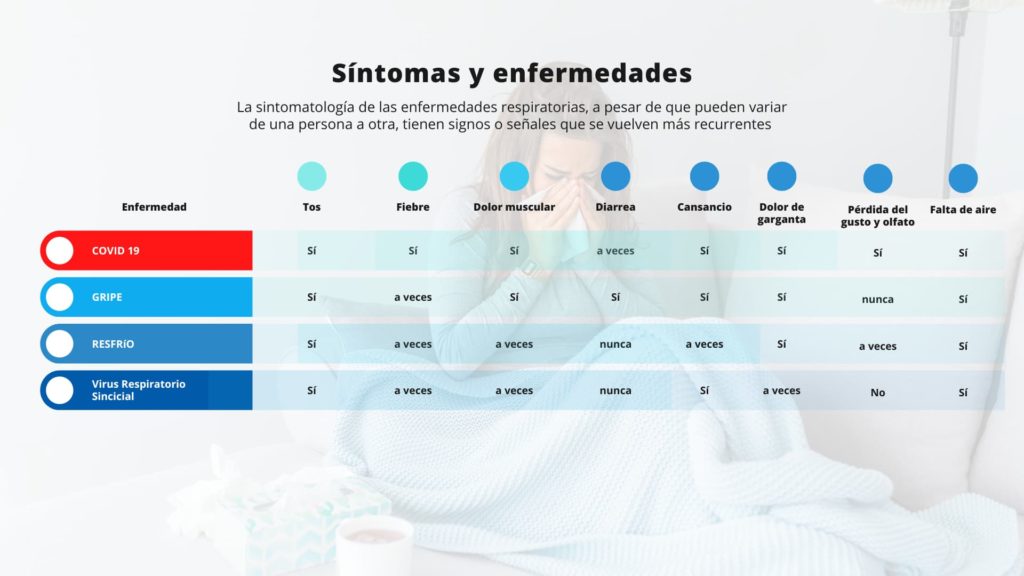
Symptoms and diseases
Although the symptoms of respiratory illnesses can vary from person to person, they have signs or signals that become more recurrent, and these can be:
Covid-19
- Hacking cough
- Headache
- Muscle pain
- Difficulty breathing
- Fever
Sometimes it may occur loss of smell and taste, as well as vomiting and diarrhea.
Despite the fact that the severity has The vaccines noticeably reduced symptoms., They can also be presented as a painting upper respiratory tract, severe cold, bronchitis and/or pneumonia.
Influenza
In the case of the influenza, This condition presents symptoms rapidly and they can be:
- Fever
- Headache
- Body discomfort
What is the difference between this and the common cold? The symptoms of influenza is much more intense and the fever is more frequent and intense. It is also presented as a upper respiratory infection, severe cold, bronchitis and/or pneumonia.
Respiratory Syncytial Virus
It mainly affects people in the at-risk group: anchildren under two years old, older adults or immunocompromised individuals.
He Respiratory syncytial virus (RSV) It compromises the respiratory tract, causing complications which can range from a from a simple cold to severe pneumonia.
Its main symptoms include:
- Nasal mucus
- Cough
- Sneezing
- Difficulty breathing
- Very rapid and deep breathing (ribs are visible or the abdomen sinks below the ribs).
- Presence of bluish coloration around the mouth
- Decay
- Loss of appetite
Can it be prevented?
Just like the Covid-19, the hygiene measures and therefore of prevention These are key to avoiding infection, such as: frequent hand washing and if the child has symptoms or is ill,“Try not to send him to school or daycare. so as not to spread the contagion.
Summary table with diseases and symptoms
Recommendations
- Ventilate enclosed spaces
- Constant hydration
- Frequent hand washing
- Avoid crowds or busy enclosed spaces
- Get vaccinated in the case of those diseases that have an immunization schedule.
- Avoid sudden temperature changes
- Avoid the consumption of indoor fuels: paraffin smoke, wood smoke.
Conclusions
This is the time of year when it happens peak of respiratory illnesses due to the low temperatures and environmental pollution. Therefore, it is especially recommended, pay attention to the symptoms which could indicate the development of a respiratory condition.
We know the importance of preventing, detect in time and be prepared.
We must fstrengthen he self-care and the propagation measures.
Don't let the days go by. avoid complications, Be alert for any of these symptoms:
• High fever that does not subside
• Severe cough
• Ear pain
• Difficulty breathing
It is important to maintain a hand hygiene adequate and consistent; performing cleaning of surfaces, ventilation of rooms y maintain social isolation before the presence of symptoms.
Connect with what matters most, YOUR HEALTH
Visit us o Schedule a video consultation if you prefer not to leave home.