

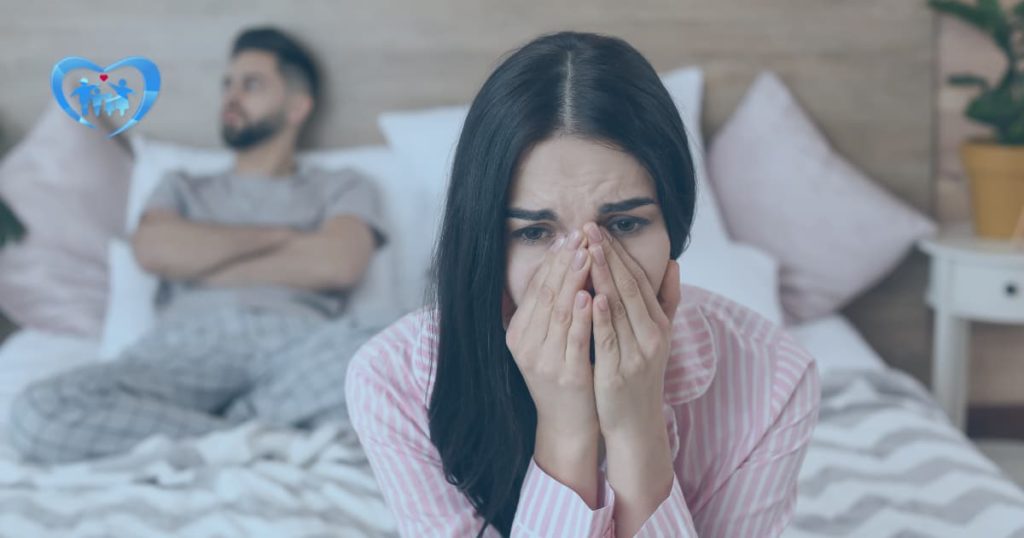
Many women experience problems with the sexual function Sexuality is experienced and expressed in everything we are, feel, think, and do. Some women struggle with it at some point in their lives, while others experience difficulties throughout their lives. Sexuality is the result of the interaction of biological, psychological, socioeconomic, cultural, ethical, religious, and spiritual factors. Therefore, sexuality is experienced and expressed in everything we are, feel, think, and do. And for this reason, it is one of the aspects most vulnerable to physical and/or mental health.
In the There are key stages for women that encourage sexual dysfunctions such as going through puberty, childbirth and postpartum, breastfeeding, menopause, or simply being older or elderly.
Sexual problems in women
Sexual dysfunction involves the absence or alteration of one or more phases of the sexual response: desire, arousal, orgasm and resolution. Depending on the case, it may involve a lack of interest, a inability to feel pleasure, a physiological problem that prevents or hinders proper sexual resolution or a inability to control or feel orgasm.
Sexual desire
It is the most frequent disorder seen in women's consultations, manifesting as a chronic lack of desire to engage in erotic activity with a partner. It results from multifactorial causes, among which the following stand out: family or work-related stress, depression, menopause, life events, and alcoholism in the partner. This is another of the main reasons for consultation among young, working women. These disorders can appear as a deficiency (low desire), an excess (hypersexuality), or due to variations in the object of desire (paraphilias).
Sexual arousal disorder
Absent or reduced interest in sexual activity, fantasies, or thoughts.
Anorgasmia
This refers to the difficulty a woman experiences when she can feel desire and arousal but is unable to reach orgasm during intercourse. Primary anorgasmia occurs when she has never experienced orgasm, while secondary anorgasmia occurs when she has temporarily lost this ability. In short, it involves the absence of orgasm and a reduction in the intensity of orgasmic experiences.
Vaginismus
This refers to an involuntary contraction or spasm of the vaginal muscles that delays or prevents penetration. It is a psychological disorder that manifests as fear or anxiety related to penetration (which may also include pain), and physically as vaginal spasms.
Dyspareunia
Genital discomfort or pain recurring that appears earlier, during or after intercourse or of superficial or deep vaginal penetration, related to a physical cause identifiable except for the lack of lubrication.
Risk factors
Sexual problems often develop due to physical, hormonal, psychological, and social factors.
- Depression or anxiety
- Heart and blood vessel disease
- Neurological disorders, such as spinal cord injury or multiple sclerosis.
- Gynecological disorders, such as vulvovaginal atrophy, infections, or lichen sclerosus.
- Certain medications, such as antidepressants or medications for high blood pressure.
- Emotional or psychological stress, especially regarding the relationship with the partner
- History of sexual abuse
How can these problems of sexual dysfunction be reversed?
The causes of these problems They are multiple and can occur because not having received a education geared towards a healthy sex life; by local alterations that cause pain; because of the estrogen drop that occurs in the breastfeeding or menopause; or even due to insufficient prior games.
Sexual dysfunctions of organic origin occur for medical reasons, whether due to the consumption of drugs that affect desire, having infections, vaginal malformations and gynecological problems, among others.
He first step that should carry out it's a medical check-up. Once the underlying cause has been ruled out and treated, psychological treatment should be considered. This is of utmost importance. importance that women dare to consult a doctor in a timely manner, because these disorders can be resolved when a diagnosis is made and a procedure is received at the appropriate time.
Conclusions
Learning about our sexuality y knowing how to identify the difficulties It is one of the most important, he other I would be admit that you have a problem, which is not resolved with the passage of time and the fact that it is a secret matter. Asking for help as soon as possible is essential, all the dysfunctions of this type They have treatment And the sooner you seek help, the shorter the period of suffering will be, both individually and as a couple.
Have bad sexual experiences predisposes to more dysfunctions. This creates a vicious cycle where sexual activity becomes associated with displeasure or pain, activating unconscious mechanisms that block desire, arousal, and orgasmic capacity. The consequences are very dangerous for relationships and for each individual's self-esteem. Waiting is not an option, These problems can lead to issues with self-esteem, relationships, violence, or sexual abuse.
In Clinical Hispanic Metroplex Our mission is to create a safe and confidential space so we can work together on the patient's recovery. We are concerned about these issues and offer options to improve sexuality and, consequently, well-being. quality of life of women, his partner and his family. Visit us o Schedule a video consultation as you prefer