There are many questions: if I'm under 40, do I need to get a checkup? What tests will they do? And many more. breast cancer Breast cancer is one of the most common malignant tumors among women worldwide. It is estimated that the lifetime risk of developing breast cancer is approximately 1 in 8 women. Breast cancer occurs most frequently in women over 50, but a 100% of cases are diagnosed in women under 40.
All the answers to your questions about breast cancer
Many women with breast cancer experience no symptoms, while others only detect it when symptoms appear, which are almost always very advanced. For this reason, it is extremely important to get early detection tests, and above all, being informed gives you the tools to prevent it in time. Below, we answer all the questions you may have:
What are the warning signs?
Appearance of a lump
Nipple discharge
Changes in size and shape
Ulcers, changes in color, and skin alterations
Nipple retraction
Redness or burning
Breast pain
Nodule in the armpit
Should I get checked before I turn 40?
First, you need to check if the family member who had cancer is a first-degree relative (mother or sister) and the age at which they had it. It's important to talk to your family doctor and perform breast self-exams to stay alert.
What are the risk factors for breast cancer?
The factors associated with the development of breast cancer are:
Alcohol consumption
Tobacco
Obesity
Hereditary aspects
It has also been observed that there are hormonal variables, such as early age of menstruation, older age at first pregnancy, a low number of births, and a shorter breastfeeding period.
If I'm pregnant, can I get breast cancer?
Yes, it is rare, but there are cases where what is best for both the mother and the baby is prioritized.
Is there a cure for breast cancer?
Early detection is always crucial, as it plays a fundamental role. Breast cancer is one of the cancers with the highest cure rate, around 85%. However, in patients with small tumors, no axillary involvement, and specific biological characteristics, the cure rate is significantly higher than 90%.
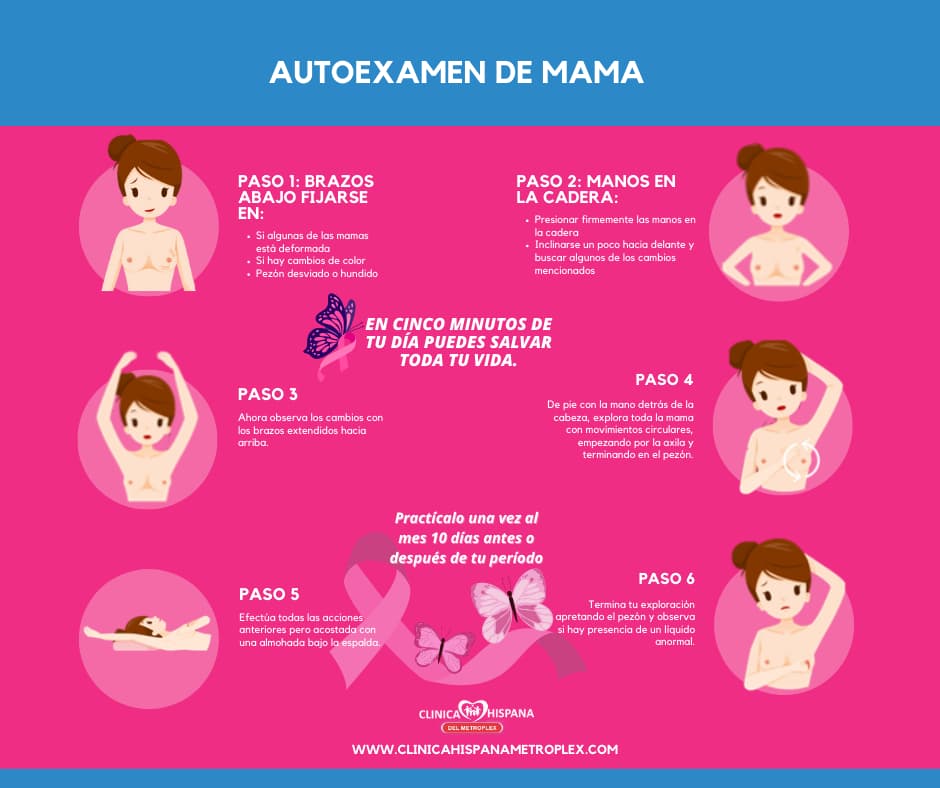
When should I perform a breast self-exam?
Monitor and detect: the strategy is in your hands. Follow these three steps. It's very important to perform a breast self-exam once a month. It only takes about 5 minutes to save your life. We recommend doing it 10 days after your period. Save your life with these 3 strategies:
Breast self-examination: Once a month, 10 days after your period. Watch the video: Six ideal steps for performing a breast self-exam
Medical examination: Once a year after age 40
Mammography: Once a year after age 40.
How should I perform a breast self-exam?
Breast self-examination in six simple steps. Watch video.
Conclusions
It is very common for women not to keep up with their mammograms, and the vast majority have gone more than 5 years without having their exam, and these behaviors are really dangerous because in that group of patients we will never detect early cancer.
Today, many people never get their preventive medical exams, leading to an increase in cancer rates that are detected too late for effective intervention. For our Hispanic clinics, it's very important to conduct these campaigns on our social media, especially informative ones, as they connect us with people and help women in our Latina community take care of themselves.
We want our clinics to provide you with all the information you need and allow you to get tested if you suspect you may have this disease. Clínica Hispana del Metroplex, through its preventative programs, aims to offer breast cancer screenings to healthy women, with the goal of early detection of this type of cancer and others in both women and men. Committed to prevention, driven by our passion for the profession, we are dedicated to educating and maintaining a healthy community. Learn more about our laboratory services.
Female contraceptives have evolved, offering greater effectiveness and fewer side effects. These advances have led to the existence of contraceptive methods that are practically…